

Fire safety is not just about alarms and extinguishers - it is about trained people who can lead a calm evacuation when it matters most. This guide looks at fire warden duties specifically for manufacturing and factories, the fire risks that matter most and the procedures that keep everyone safe.
By the end, you will understand a fire warden's duties, how evacuation and the assembly point work, the extinguisher classes and the PASS technique, and how an accredited online Fire Warden course - also known as fire marshal training - gives your team the knowledge they need, with a same-day certificate.
What a fire warden actually does
A fire warden - also called a fire marshal - is a member of staff trained to help prevent fires and to take charge if one happens. In Ireland the two titles mean the same role, the same duties and the same training. Day to day they keep escape routes clear and spot hazards; in an emergency they raise the alarm, lead a calm evacuation, and account for everyone at the assembly point.
For manufacturing and factories, that means tasks such as roll call at the assembly point, shutting down processes safely and guiding the fire service. Under Section 11 of the Safety, Health and Welfare at Work Act 2005, every employer must prepare an emergency plan and appoint staff to carry it out - and those appointed, trained staff are your fire wardens.
The fire risks that matter most in manufacturing and factories
Every setting has its own fire risks. In manufacturing and factories, the issues that cause the most danger - and the most difficult evacuations - tend to be a familiar handful. Knowing them is the first step for any fire warden.
- Machinery, dust and hot work
- Flammable materials and chemicals
- Large floor areas and noise
- Shift working
Practical fire safety controls for manufacturing and factories
These are the points where fire wardens make the biggest difference. When fire safety is neglected - for example, flammable stock stored against the only fire exit - the result can be a dangerous, even deadly, situation.
| Fire risk | How to control it |
|---|---|
| Machinery, dust and hot work | Hot-work permits and housekeeping |
| Flammable materials and chemicals | Flammables stored and controlled correctly |
| Large floor areas and noise | Clearly marked exits and refuges |
| Shift working | Trained wardens on every shift |
The core duties of a fire warden
A fire warden's duties fall into two parts: everyday prevention, and emergency response. In manufacturing and factories, both matter every single day:
- Prevention. Keep escape routes and fire exits clear, watch for hazards, and check that fire doors and equipment are in order.
- Raise the alarm. Activate the alarm and alert people the moment a fire is discovered.
- Lead the evacuation. Direct people calmly to the nearest safe exit and on to the assembly point.
- Sweep the area. Check rooms, toilets and quiet corners so nobody is left behind.
- Assist those who need help. Put PEEPs into action for anyone who cannot evacuate unaided.
- Roll call and handover. Account for everyone at the assembly point and brief the fire service on arrival.
Fire extinguishers and the PASS technique
A fire warden should know which extinguisher suits which fire, and how to use it. Using the wrong type can make a fire worse, so matching the extinguisher to the fuel is essential:
- Water - for Class A fires (wood, paper, textiles).
- Foam - for Class A and Class B (flammable liquids).
- CO2 - for electrical fires and Class B.
- Dry powder - for many fire classes, including some gases.
- Wet chemical - for Class F (cooking oils and fats).
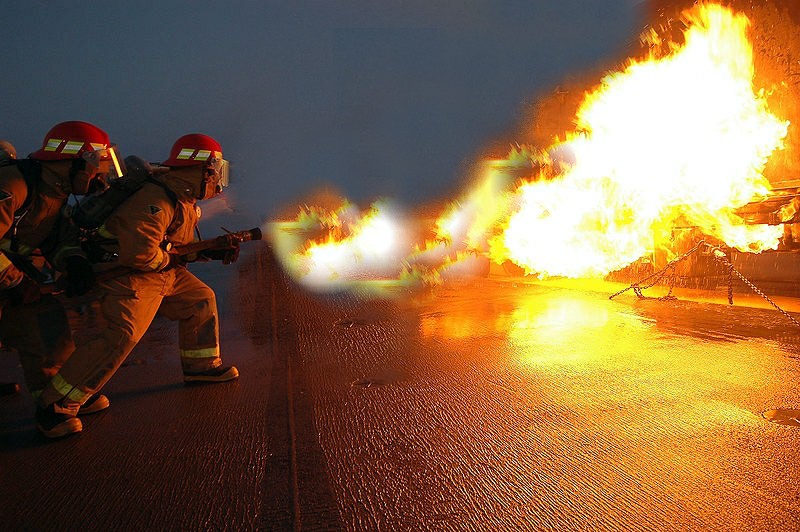
To use one, remember PASS: Pull the pin, Aim at the base of the fire, Squeeze the handle, and Sweep side to side. Only ever tackle a small fire with a clear escape route behind you - if in doubt, get out and leave it to the fire brigade.
Fire safety law in Ireland
Two pillars of legislation sit behind the fire warden role. the Fire Services Acts 1981 and 2003 place duties on those in control of premises to provide for fire safety and safe evacuation. the Safety, Health and Welfare at Work Act 2005 - in particular Section 11 - requires every employer to prepare an emergency plan and to appoint and train staff to carry it out. The Health and Safety Authority (HSA) enforces workplace safety duties, while local fire authorities oversee fire safety in buildings.
Training is a key part of meeting these duties. Online fire warden training builds the knowledge, duties and legal understanding the role demands; for the practical side, hands-on extinguisher use and site-specific drills complete the picture.
Training your fire wardens the easy way
Fire safety works when your appointed people genuinely understand their role. Our Fire Warden Course - also known as fire marshal training - is CPD certified, takes around 45 to 90 minutes, and finishes with a short assessment and a same-day certificate.
It is the fastest way to bring operatives, line leaders and shift managers up to a recognised standard - and because it is online and self-paced, nobody has to leave the workplace for a full day. You can train one person or a whole team and keep every certificate in one place as evidence.
Frequently asked questions about fire wardens in manufacturing and factories
Who should be a fire warden?
Fire wardens should be reliable staff who are usually on site, able to stay calm, and willing to take responsibility in an emergency. You need enough of them to cover every area and shift.
How long does the fire warden course take?
Our online course takes around 45 to 90 minutes. You complete a short assessment at the end and download your CPD certificate the same day, with no waiting and no postage.
How many fire wardens does a workplace need?
It depends on the size and layout of the premises, the number of floors and occupants, and the shifts worked. As a guide, provide cover for every floor or area, plus enough wardens to allow for holidays and absence. Your fire risk assessment confirms the number.
Can fire warden training be done online?
Yes. The knowledge and duties of the role are well suited to online learning, and our course is fully online and self-paced with a same-day certificate. Practical extinguisher use and site-specific drills complete the training.
What does the PASS technique stand for?
PASS stands for Pull, Aim, Squeeze, Sweep - pull the pin, aim at the base of the fire, squeeze the handle and sweep side to side. Only tackle a small fire with a clear escape route behind you.
Get fire warden certified today
Ready to protect your people and meet your duties? Enrol on the Fire Warden Course now, train at your own pace, and download your CPD certificate the same day. It is the simplest step you can take towards a safer, better-prepared workplace.